History
What community radio teaches a federated network
Long before a small XMPP server asked who may run a node, low-power radio was answering the same question on the airwaves.
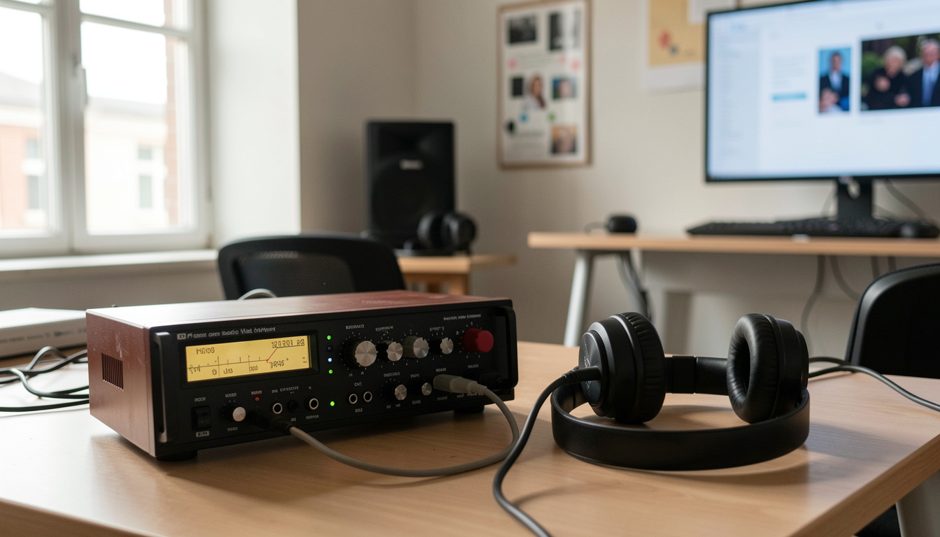
A federated network and a local radio station look unrelated until the question underneath both is named: who is allowed to operate a transmitter? In XMPP the transmitter is a server, the licence is a domain name, and the audience is whoever can reach it. In American community radio the transmitter is literal, the licence is issued by a regulator, and the reach is measured in miles. The parallel is worth reading slowly, because low-power FM settled, in public and on paper, questions that federated software still settles server by server.
The LPFM service created a class of licence for stations of a hundred watts or less, antennas capped at thirty metres, aimed at non-commercial local voices. A hundred watts reaches a neighbourhood, not a state, and that was the point: the policy deliberately traded coverage for who gets to speak. The practical literature around it is remarkably operational. The review site low-power community radio keeps track of the things a station actually has to solve, application windows, studio budgets, EAS alerting, and reading it next to a server checklist makes the resemblance hard to unsee. The background of the service itself is documented on the low-power broadcasting record, from the licensing fights to the station counts.
What did the licence actually buy?
Permission to occupy a slice of spectrum at a fixed power, in a fixed place, under rules about interference with neighbours. The licence did not buy reach: it bought legitimacy within limits. A full-power station and a low-power station use the same frequencies and the same physics, and the difference between them is a policy choice about scale, made explicit in watts and metres rather than in mission statements.
Federation makes the same choice from the other direction. An XMPP server is not a smaller version of a large service; it is a participant on equal terms, and the protocol does not care whether it serves ten accounts or ten million. What the radio parallel adds is that the equality was argued for, not found. Small stations exist because a regulator decided that a hundred watts of local speech had value worth protecting against interference claims from larger neighbours. Small servers exist because the protocol never created a higher class of participant. One is policy, the other is architecture, and they rhyme.
Why does a volunteer budget look like a server rack?
Because both are the same shape of organisation: a small group keeping a public utility alive out of surplus effort. A community station has a transmitter to feed, a studio to staff, a licence to renew and an obligation to the neighbourhood it covers. A small federated server has a host to pay for, certificates to renew, software to update and users who treat it as infrastructure the day it works and as a personal slight the day it does not. Neither is a product, and both die the same death when the volunteer who understood the wiring moves away.
The radio world wrote this down earlier and more honestly, because its failures were visible: a station off the air is a fact anyone with a receiver can check. Its guidance about handover, documentation and boring regular maintenance reads like server administration advice wearing different clothes. The essay on the weekly maintenance round is the same lesson in the other dialect.
There is even a spectrum parallel in the addressing. A station’s licence is bound to a frequency and a place the way a JID is bound to a domain, and both are allocations of a commons that only work because the rules are shared. Nobody pretends a frequency belongs to a station forever; the licence is conditional, reviewed, revocable. The domain name a server answers to is rented the same way, and the maturity of a community shows in whether it treats that as an insult or as a fact to be planned around.
The inheritance that ran the other way
There is a direction to this history. The open protocol world did not invent local operation; it inherited the assumption that local operation was legitimate. Pirate and community broadcasters had already made the argument that a network of small voices could coexist with large ones, and the engineers who wrote the early Jabber software were working inside a culture where running your own node needed no excuse. The sequence from jabberd to the RFCs is partly that assumption made technical: a server was something an individual ran, and the standards preserved it.
Where the parallel ends
At the regulator. Radio needed permission because spectrum is a commons that interference can ruin, so a public body allocated slices. The internet’s commons is addressed differently, and a federated server needs no licence because one more node congests nobody. The lesson that survives is not the licence but the posture: a small operator, a defined patch, a duty to whoever listens, and a paper trail that lets the next volunteer pick it up. Community radio worked out how to be small on purpose. Federation is still learning it.